
Understanding Video Annotation
Video annotation is the process of enriching video sequences with labels, descriptions, or visual markers to make them understandable and usable by artificial intelligence systems. This practice is essential for supervised learning , as it enables AI models to associate labels with objects, movements, and events. In Switzerland and the USA, where digital innovation continues to expand rapidly, video annotation plays a central role in image recognition, intelligent surveillance, autonomous systems, and behavioral analysis.
Objectives and Importance of Video Annotation
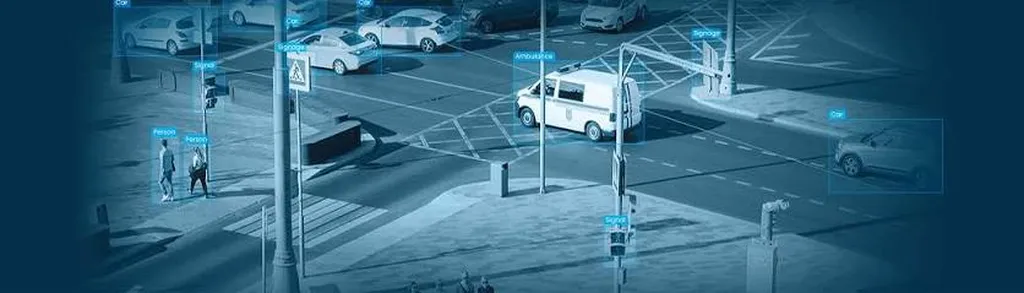
Video annotation goes beyond making videos understandable for humans—it makes them interpretable by machines. By assigning accurate labels to objects or actions, AI algorithms learn to recognize similar situations in new datasets. For example, if a video sequence is annotated to indicate that a pedestrian is crossing the street, the system can use supervised learning to identify the same behavior in future recordings. In Switzerland and the USA, these applications are already transforming healthcare, transportation safety, financial analytics, and many other industries where video analysis is becoming increasingly valuable.
Differences Between Image Annotation and Video Annotation
Image annotation and video annotation are often confused, but they serve different purposes. Image annotation focuses on a single static picture, whereas video annotation follows a temporal sequence by analyzing frame after frame to track objects and movements over time. While image annotation may simply identify that « a bicycle is present, » video annotation can specify that « the bicycle is moving, changing direction, and eventually stopping. » In Switzerland and the USA, this distinction is particularly important for intelligent mobility projects, autonomous vehicles, and smart transportation systems.
Video Annotation Methods
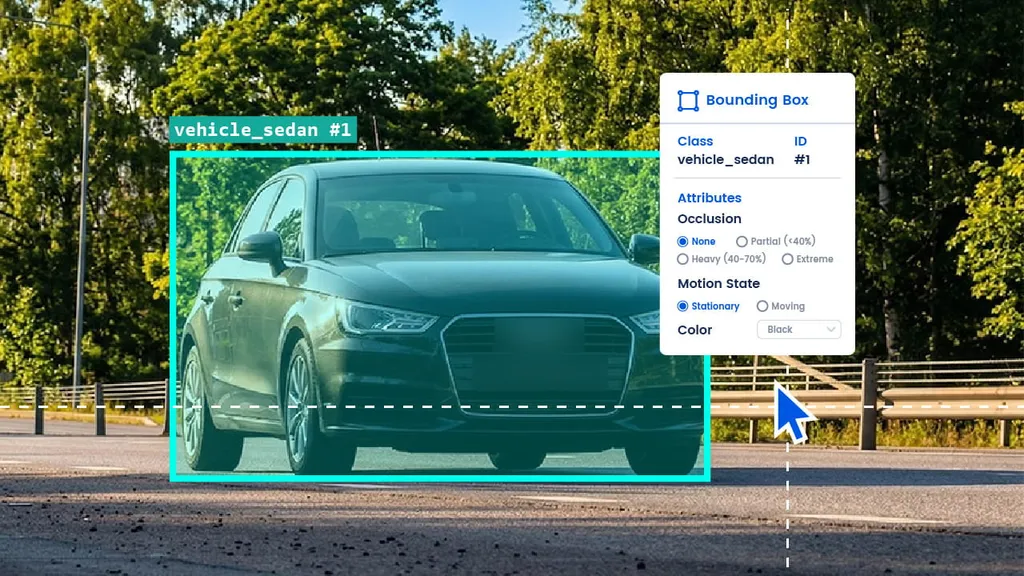
Video annotation techniques vary depending on the requirements of each AI project. The most common methods include:
- Bounding boxes for tracking moving objects.
- Polygon annotation for outlining complex shapes.
- Pixel-level segmentation for detailed scene analysis.
- Keypoint and skeleton annotation for capturing human poses and gestures.
- Semi-automated tracking, combining AI-powered tools with human validation.
In Switzerland and the USA, these techniques are widely applied in precision manufacturing, connected healthcare, automotive engineering, robotics, and industrial automation.
Types of Video Labeling
Several forms of video annotation are used depending on the objectives of the project:
- Object annotation to identify people, vehicles, animals, or products.
- Action annotation to detect activities such as running, speaking, driving, or lifting objects.
- Contextual annotation to describe environments, locations, and surrounding conditions.
- Behavioral annotation to analyze emotions, interactions, and user behavior.
- Event annotation to detect incidents, anomalies, or unusual situations.
These annotation methods significantly improve AI models by enabling them to better understand real-world scenarios. In Switzerland and the USA, they are increasingly used in virtual training, public safety, logistics, retail analytics, and smart city initiatives.

Video Annotation Use Cases in Switzerland and the USA
Video annotation supports numerous strategic industries, including:
- Automotive: Training autonomous vehicles to recognize roads, pedestrians, and traffic signs.
- Healthcare: Motion analysis for rehabilitation programs, medical diagnostics, and patient monitoring.
- Security: Intelligent video surveillance systems deployed in cities and public infrastructure.
- Retail: Customer behavior analysis and shopping pattern recognition.
- Sports: Athlete performance tracking, movement analysis, and injury prevention.
- Language Technologies: Combining video annotation with Natural Language Processing (NLP) to create more intelligent virtual assistants and AI-powered communication systems.
These applications demonstrate how video annotation has become a major driver of innovation and competitiveness in both Switzerland and the USA.
Challenges of Video Annotation
Although video annotation is essential for AI development, it presents several important challenges:
- High costs: Annotating thousands of hours of video requires significant human resources.
- Accuracy: Incorrect annotations can reduce the effectiveness of supervised learning models.
- Complexity: Tracking fast-moving, partially hidden, or interacting objects remains technically demanding.
- Data privacy: Protecting sensitive video data is particularly important in Switzerland and the USA, where privacy regulations continue to evolve.
- Scalability: As video datasets continue to grow exponentially, annotation processes must become increasingly automated while maintaining high quality.
These challenges encourage organizations in Switzerland and the USA to adopt hybrid approaches that combine AI automation with expert human validation to ensure optimal results.

Conclusion
Video annotation has become one of the most important resources for training artificial intelligence systems based on supervised learning. In Switzerland and the USA, it is driving significant advances across the automotive, healthcare, security, retail, sports, and technology sectors. By combining image recognition , Natural Language Processing (NLP), and advanced AI technologies, video annotation is paving the way for a future in which intelligent systems become more accurate, reliable, and capable of solving increasingly complex real-world challenges.